3x15 Scoring System: The Biggest Change in Badminton History?
The BWF will vote on replacing the current 21-point system with a revolutionary 3x15 format (with setting to 21) at the AGM in April 2026. Games would be shorter and more intense — here's what it means for club play.
Read moreHow the 3x15 System Would Work
Games to 15 (not 21) · Setting at 14-all — must win by 2, capped at 21 · Interval at 8 points · Still best of 3 games · Testing showed shorter, more intense matches with fewer injury-length marathons. The BWF Council endorsed this in November 2025 after trialling at Continental Championships and Grade 3 events throughout 2025. Indian Express analysis

English Nationals Coming to Manchester in 2026
The English National Badminton Championships will be held in Manchester for the 2026 edition — a landmark venue change.
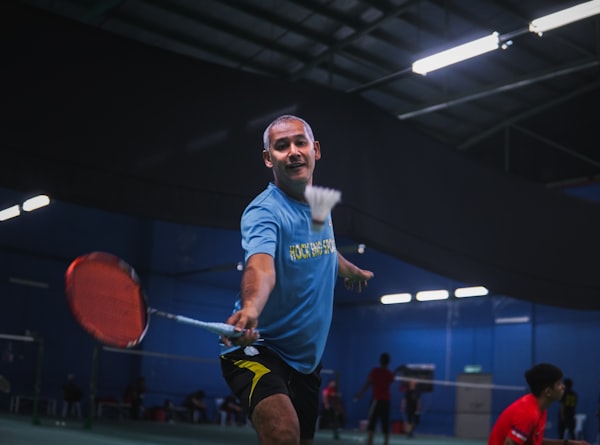
National Badminton League 2025-26 Season
The NBL is back for 2025-26 with teams from across the country competing in the UK's premier club competition.
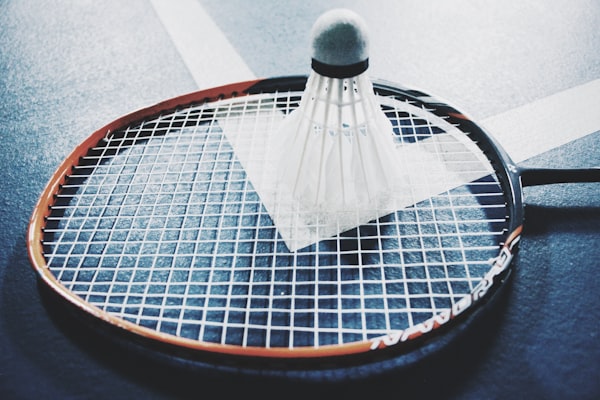
YONEX All England Open 2026 — Tickets on Sale
The world's oldest and most prestigious badminton tournament returns to Utilita Arena Birmingham, 10-15 March 2026.
Full BWF 2026 Tournament Calendar
All dates for the HSBC BWF World Tour 2026 — Super 1000, Super 750, Super 500 events worldwide plus World Championships.

Save the Date — YONEX All England 2026
Hospitality and VIP packages now available for the 2026 All England Championships in Birmingham.
Nottinghamshire BA — Results & League Tables
Check the latest Notts league standings, fixture updates, and county team news for the 2025-26 season.
Contents
Scoring System Service Rules Court & Equipment Faults & Lets Doubles-Specific Rules League Match Format Player Conduct & Etiquette Official SourcesScoring System
Current System (21-Point Rally Scoring)
- A match is the best of 3 games
- Each game is played to 21 points using rally scoring (a point is scored on every rally regardless of who served)
- At 20-all, the side which gains a 2-point lead first wins the game
- At 29-all, the side scoring the 30th point wins the game
- The side winning a game serves first in the next game
- Players change ends after each game and at 11 points in the third game
Proposed 3x15 System (Under BWF Review)
- Games played to 15 points instead of 21
- At 14-all, setting applies — must win by 2 points
- Setting is capped at 21 points (first to 21 wins)
- Interval at 8 points
- Still best of 3 games
- BWF AGM vote scheduled for April 2026
Service Rules
Legal Service
- The shuttle must be hit below 1.15 metres from the court surface at the point of contact (fixed-height rule introduced 2018)
- The shaft and head of the racket must point downwards at contact
- The server's racket must initially contact the base of the shuttle
- The server and receiver must stand within their respective service courts, diagonally opposite
- Both feet must be in contact with the floor at the moment of service
- Once the server and receiver are ready, the first forward movement of the server's racket head is the start of the service
- The server shall not serve until the receiver is ready — but the receiver is considered ready if a return is attempted
Service Sequence (Doubles)
- At the start of a game, the serving side serves from the right service court
- When the serving side's score is even, the server serves from the right court; when odd, from the left court
- The player who served last stays in their court for the next rally
- Service passes to the receiving side when the serving side loses a rally
- The player in the correct service court (right if even, left if odd) serves or receives
Court & Equipment
Court Dimensions
- Doubles court: 13.40m long x 6.10m wide
- Singles court: 13.40m long x 5.18m wide
- Net height: 1.55m at the posts, 1.524m at centre
- Short service line: 1.98m from the net
- Long service line (doubles): 0.76m from the back boundary
- Minimum ceiling height: 9m (international), 7.6m (club level recommended)
Shuttle Specifications
- Feathered shuttles: exactly 16 feathers from a goose's left wing
- Weight: 4.74g to 5.50g
- Feathers must be 62mm to 70mm in length
- Cork base diameter: 25mm to 28mm
- Synthetic shuttles are permitted but must replicate the flight characteristics of feathered shuttles
- Speed testing: a full underhand stroke from the back boundary line should land between 530mm and 990mm short of the opposite back boundary
Faults & Lets
Common Faults
- The shuttle lands outside the court boundaries
- The shuttle passes through or under the net
- The shuttle is hit twice in succession on the same side
- The shuttle is caught and held on the racket then slung during a stroke
- A player touches the net or its supports with racket, body, or clothing during play
- A player invades the opponent's court over the net (racket may follow through over the net after the initial point of contact is on the striker's side)
- A player obstructs or distracts an opponent
- Service faults: shuttle above 1.15m, racket not pointing down, or feet off the ground
Lets
- A let is called by the umpire to halt play — no point is scored and the rally is replayed
- The server serves before the receiver is ready
- During service, both the server and receiver are faulted simultaneously
- The shuttle disintegrates or separates from the base during play
- An unforeseen situation disrupts play (e.g. shuttle from another court)
- A line judge is unsighted and the umpire cannot make a decision
Doubles-Specific Rules
Court Usage in Doubles
- Service: Must land in the diagonally opposite service court (short service line to long service line for doubles — 0.76m shorter than singles back line)
- During rallies: The full court width (6.10m) is used, including the tramlines
- Only the receiver may return the serve — if the partner is hit by or hits the serve, it is a fault on the receiving side
- After the return of serve, either player on a side may hit the shuttle from any position
Rotation & Positioning
- Players do not switch service courts after winning a rally while receiving
- Players switch service courts only when they score a point while serving
- The serving order alternates between teams but not between partners within a team during a single service turn
- At the start of each game, the serving side chooses which partner serves first; the receiving side chooses who receives first
League Match Format
Nottinghamshire League Format
- Each match consists of up to 9 rubbers (3 men's doubles, 3 ladies' doubles, 3 mixed doubles)
- Each rubber is played as the best of 3 games to 21 points (rally scoring)
- The team winning the most rubbers wins the match
- In the event of a 4-4 tie in rubbers, the result is determined by total games won
- If games are also tied, total points scored is the tiebreaker
- Match results contribute to league standings with points for wins, draws, and losses
Match Night Logistics
- Home team provides shuttles (feathered shuttles for higher divisions)
- Matches typically start at 7:30pm unless otherwise agreed
- Teams must field the required number of players or concede rubbers for missing positions
- Results should be submitted promptly after the match
- Players must be registered members of Badminton England to play in league matches
- Substitutions during a rubber are not permitted unless due to injury
Player Conduct & Etiquette
Official BWF Code of Conduct
- Players shall not deliberately delay or suspend play
- Players shall not deliberately modify or damage the shuttle to alter its speed or flight
- Players shall not behave in an offensive or inappropriate manner
- Players shall not use persistent or flagrant faults
- Coaching is not permitted during a game (only during intervals and between games)
- Continuous play: maximum 60 seconds between each game, maximum 120 seconds between second and third game
Club Etiquette
- Shake hands with opponents before and after each rubber
- Call lines honestly — if you're unsure, give the benefit to the opponent
- Return shuttles to the server promptly, not hitting them across the net casually
- Acknowledge good shots by opponents
- Avoid walking behind courts during rallies
- Arrive on time and notify your captain early if you cannot attend
- Help set up and take down nets
- Respect the facilities and clean up after the session
5 Doubles Tactics You MUST Know
Improve Your Footwork in 10 Minutes
The Secret to a Powerful Smash
How to Improve Your Backhand
Mixed Doubles — Communication & Positioning
Solo Training Drills You Can Do Anywhere
YouTube Channels
Badminton Insight
Tactics, technique breakdowns & pro analysis. The go-to coaching channel.
YouTubeTobias Wadenka
Top-quality coaching with excellent production. Footwork, drills & match analysis.
YouTubeCoaching Badminton (Lee Jae Bok)
50 years of playing & coaching experience. Detailed Korean-style technique coaching.
YouTubeShuttle Life
Fun, accessible content with doubles strategy and club-level tips.
YouTubeBWF Official
Match highlights, World Tour coverage, and behind-the-scenes from pro events.
YouTubeBadminton England
English Nationals, All England coverage, and domestic competition highlights.
YouTubeCK Yew
Malaysian coach with excellent match analysis and equipment reviews.
YouTubeVolant
In-depth racquet & equipment reviews with real testing data.
YouTubeInstagram Accounts
@officialbadmintonengland
33K followers. Official BE account — domestic news, player features, events.
Instagram@badminton.insight
114K followers. Quick coaching reels and technique breakdowns.
Instagram@baborabadminton
UK-based badminton content creator with coaching tips and club life.
Instagram@bwf.official
World Federation official — tournament highlights, player stories, world rankings.
Instagram@an_badminton98
368K followers. Creative reels with trick shots and training drills.
Instagram@tai_tzuying
The GOAT of women's singles. Deceptive shots, training and life on tour.
InstagramFastest Smash Ever
Satwiksairaj Rankireddy hit a smash at 565 km/h (351 mph) in 2024 — faster than a bullet train. In real match play, speeds typically reach 300-400 km/h.
More Running Than Tennis
A badminton player covers roughly 6.4 km per match — about twice the distance of a tennis player. And rallies happen roughly twice as fast.
16 Goose Feathers
A competition shuttlecock has exactly 16 feathers from a goose's left wing. The left wing ensures consistent rotation. Each shuttle weighs just 4.74-5.50g.
Invented in India, Named in England
The modern game evolved from "battledore and shuttlecock" played by British officers in Poona, India in the 1860s. It was named after Badminton House in Gloucestershire.
The All England is THE Tournament
First held in 1899, the All England Open is the world's oldest badminton tournament — older than the World Championships (1977) by nearly 80 years.
The Net Height Trick
The net is 1.55m at the edges but dips to 1.524m at the centre. That 2.6cm sag is why tight net shots curl over the middle, not the sides.
Longest Match: 161 Minutes
The longest recorded match lasted 2 hours 41 minutes — Taufik Hidayat vs Peter Gade at the 2005 World Championships. Under the new 3x15 system, this would be unlikely.
220 Million Players Worldwide
Badminton is played by over 220 million people globally, making it the 2nd most popular participation sport in the world after football.
Badminton England
National governing body
BWF World Tour
International results & rankings
Notts BA
Nottinghamshire league & county
Flashscore
Live scores & results
BWF Calendar 2026
Full tournament schedule
Notts Outlaws
Junior performance programme
Top 10 Footwork Drills
Written guide with coaching tips
BWF Coach Education
Free coaching video library